
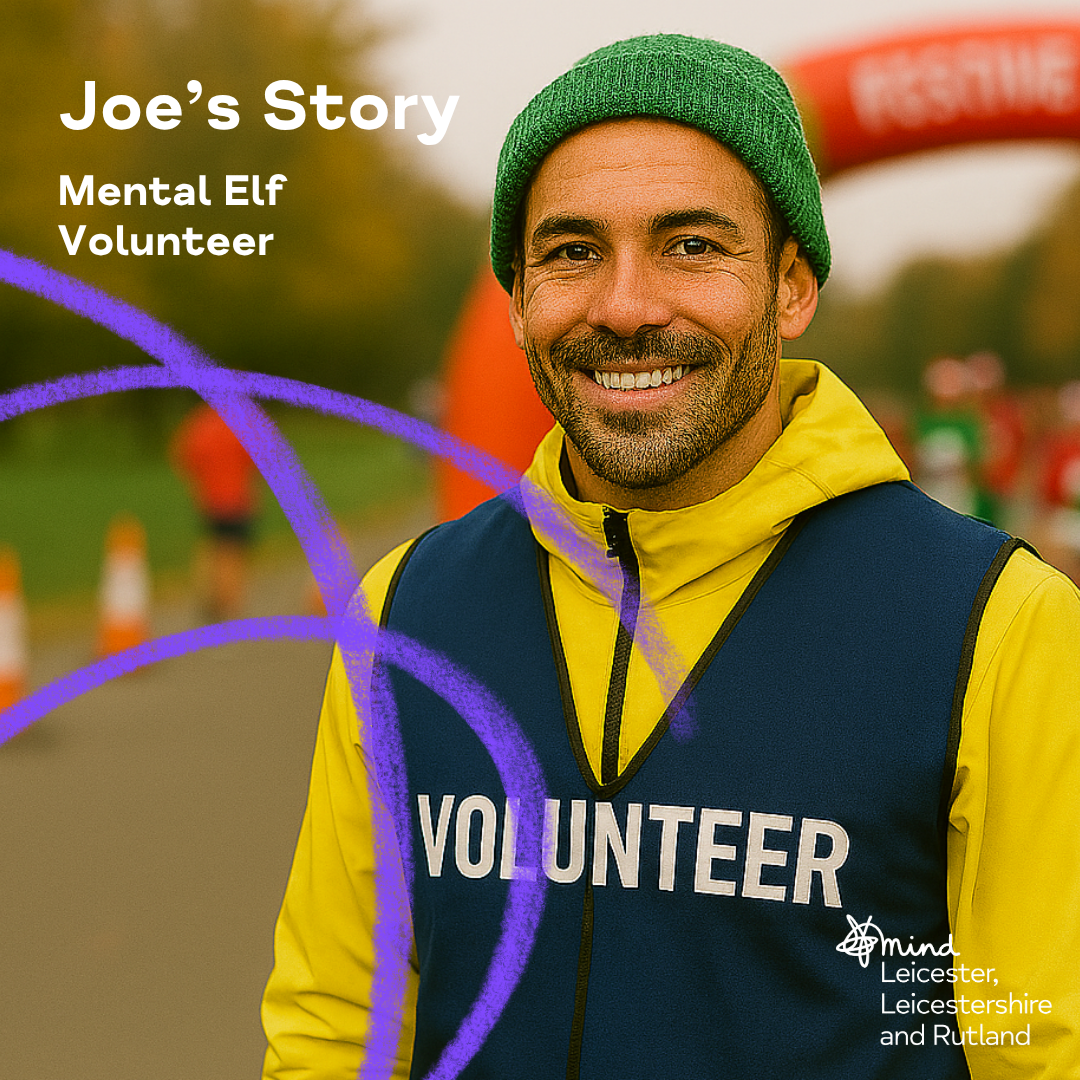
Joe's Story - A Day in the Life of a Mental Elf Volunteer
Celebrating Volunteers’ Week
Volunteers are the heart of Mental Elf, bringing energy, warmth and community spirit to every festive fun run. For Joe, an Event Marshal who has been part of Mental Elf for the past three years, volunteering is about making a difference where it matters most – supporting local people and raising awareness of mental health.
Meet Joe
Joe first got involved with Mental Elf because of a simple but powerful motivation: to do something positive for the community. Over the past three years, that commitment has grown into a rewarding and memorable experience that he looks forward to every year.
Getting Ready for the Big Day
For Joe, the day begins long before the runners arrive. Like many volunteers, he is part of the early-morning setup, helping to prepare the event from the ground up. This includes checking the route, ensuring signage is clear, and carrying out health and safety walkthroughs.
All volunteers come together for a briefing, where roles are outlined and plans are shared. It’s also a chance to welcome new volunteers and connect as a team.
That sense of teamwork, is key to making sure everything runs smoothly.
Life on the Course
As an Event Marshal, Joe’s primary responsibility is keeping participants safe throughout the run. Positioned along the route, marshals guide runners, monitor conditions and make sure everyone stays on track.
But safety is only part of the role. Joe also plays a big part in creating the uplifting atmosphere that Mental Elf is known for. With plenty of clapping, cheering and encouragement, volunteers like Joe help every participant feel supported and celebrated.
I always make sure to thank people for taking part. It’s important they know how much their effort means.
Bringing the Energy
For Joe, one of the highlights of the day is cheering participants as they complete the course. Whether someone is walking, jogging or running, every achievement is recognised.
It’s also the time to enjoy the camaraderie between volunteers – sharing laughs, chatting and keeping spirits high even on a busy day.
Behind the Scenes
While the event itself lasts only a day, Joe emphasises that Mental Elf is the result of months of careful planning and preparation. From logistics to fundraising efforts, there is a huge amount of work happening behind the scenes.
On the day, volunteers work as one team with a shared goal: to create a safe, fun and welcoming event for everyone involved.
Making a Difference
For Joe, Mental Elf is about much more than a festive run. It’s about raising awareness of mental health and showing that support is available.
The event helps people realise they’re not alone, and the fundraising allows vital local services to continue helping those who need it.
Seeing participants cross the finish line is a particularly memorable moment for Joe – a powerful reminder of the impact the event can have.
What It Means to Volunteer
One of the things Joe enjoys most about volunteering is meeting new people and being part of a supportive community. He’s also gained a deeper appreciation for how individuals can come together to support a cause.
It’s shown me just how worthwhile community events like this are.
Words of Encouragement
To anyone thinking about taking part, Joe has one piece of advice:
Embrace the fun. Wear fancy dress – it makes the day even better!
And for those considering volunteering, his message is simple:
It’s a fun and very rewarding experience.
A Festive Favourite
When asked to sum up Mental Elf in one word, Joe doesn’t hesitate:
Joyous!
And after a busy day outdoors?
There’s nothing better than warming up with a hot chocolate – perhaps alongside a well-earned samosa.
This Volunteers’ Week, we celebrate Joe and all of our amazing Mental Elf volunteers. Their enthusiasm, dedication and kindness make every event truly special.
Stock image used
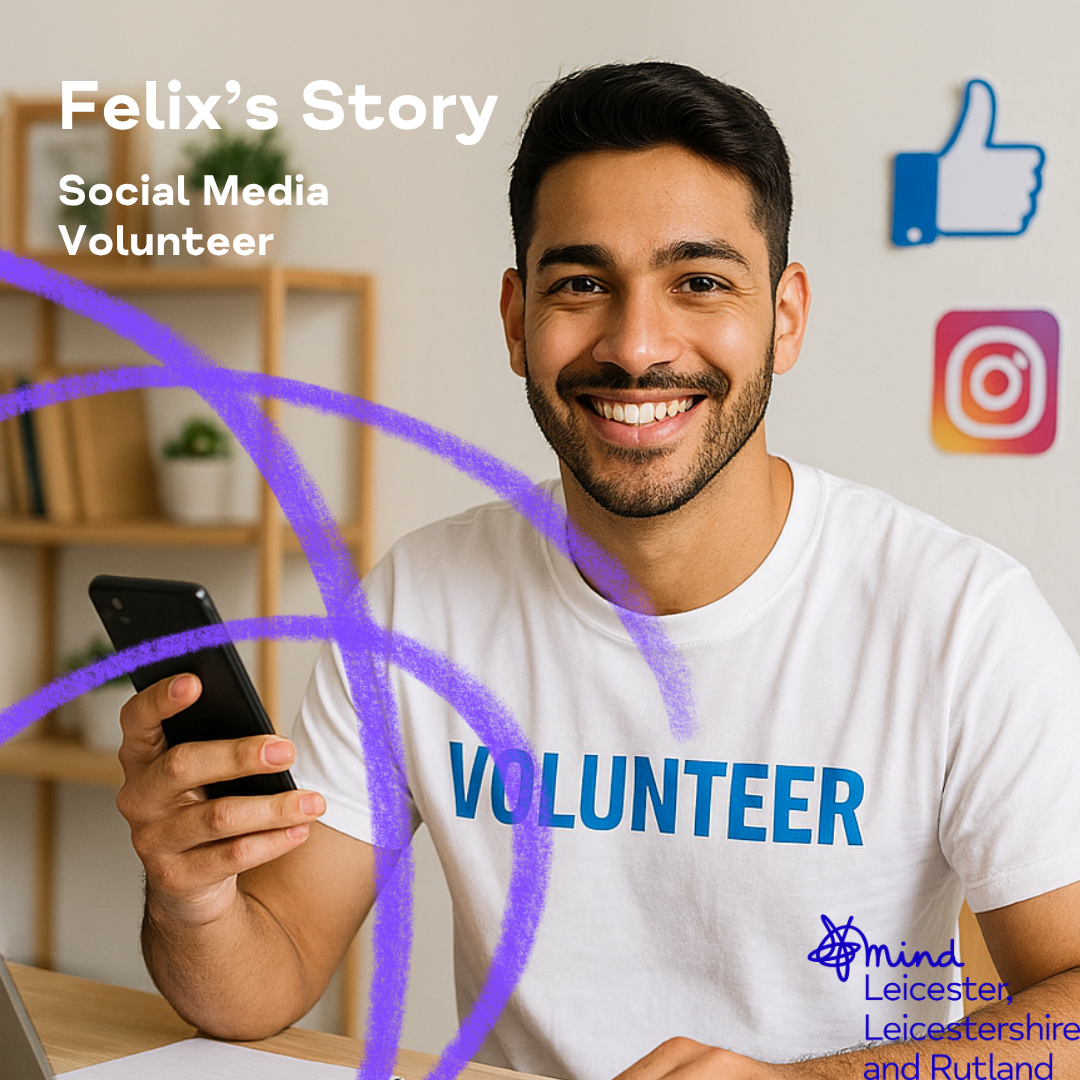
Felix's Story - A Day in the Life of a Social Media Volunteer
Celebrating Volunteers’ Week
For Volunteers’ Week, we’re proud to celebrate the people working behind the scenes to help spread awareness and start important conversations around mental health. Meet Felix, one of our social media volunteers, whose creativity and dedication help bring LLR Mind’s message to life online.
Meet Felix
Felix has been volunteering with LLR Mind since January 2026 as a social media volunteer. Inspired by the opportunity to create content that promotes mental health, Felix quickly found a meaningful way to combine creativity with purpose.
I was drawn to the idea of creating social media content tailored to LLR Mind that helps promote mental health.
What a Typical Day Looks Like
Felix’s role focuses on planning and creating engaging content that highlights mental health awareness days and events. A typical day involves researching upcoming campaigns and shaping ideas into visually engaging posts using Canva.
From concept to creation, Felix works on producing:
- Posts that promote mental health awareness days and events
- Content designed to inform, support, and inspire audiences
- Visual materials tailored for different platforms
Felix regularly works across Instagram, LinkedIn, and Facebook, helping ensure LLR Mind’s message reaches a wide and diverse audience.
Behind the Scenes
Creating meaningful content takes more than just creativity—it requires research, planning, and insight. Felix often looks at previous LLR Mind posts for inspiration, building on what works well while bringing fresh ideas to each campaign.
Using tools like Canva and Hootsuite, Felix designs and organises content to ensure it is clear, engaging, and timely.
One thing people might not realise about social media for a mental health charity is the importance of capturing attention quickly.
It’s about creating content that stands out straight away and encourages people to engage.
Making an Impact
For Felix, social media plays a powerful role in reaching people—especially younger audiences—and normalising conversations around mental health.
Social media helps amplify the importance of mental health and reduces stigma.
One highlight has been creating content around May self-care ideas, offering simple, accessible ways for people to look after their wellbeing—like taking time to read or relax. Seeing how these ideas can help others has been particularly rewarding.
Personal Growth
Volunteering has helped Felix develop valuable skills, particularly in research and creativity. It has also deepened his understanding of mental health and the importance of talking openly about it.
It has greatly improved my perception of mental health.
Felix especially enjoys discovering the wide range of mental health events throughout the year and turning them into engaging content that connects with others.
Words of Encouragement
Felix encourages anyone interested in volunteering to give it a go:
You gain valuable experience, especially if you’re interested in marketing.
According to Felix, great social media volunteers are people who stay aware of important events and can create relevant, engaging content that speaks to the moment.
Quick Fire Round
- Favourite type of post: Campaigns that encourage people to talk and connect
- Tea or coffee: Tea
- Best emoji to describe volunteering: 🧐
Felix’s work highlights how powerful digital storytelling can be in supporting mental health. This Volunteers’ Week, we thank Felix—and all our volunteers—who help us reach more people, spark important conversations, and make mental health support more visible and accessible to all.
Stock image used
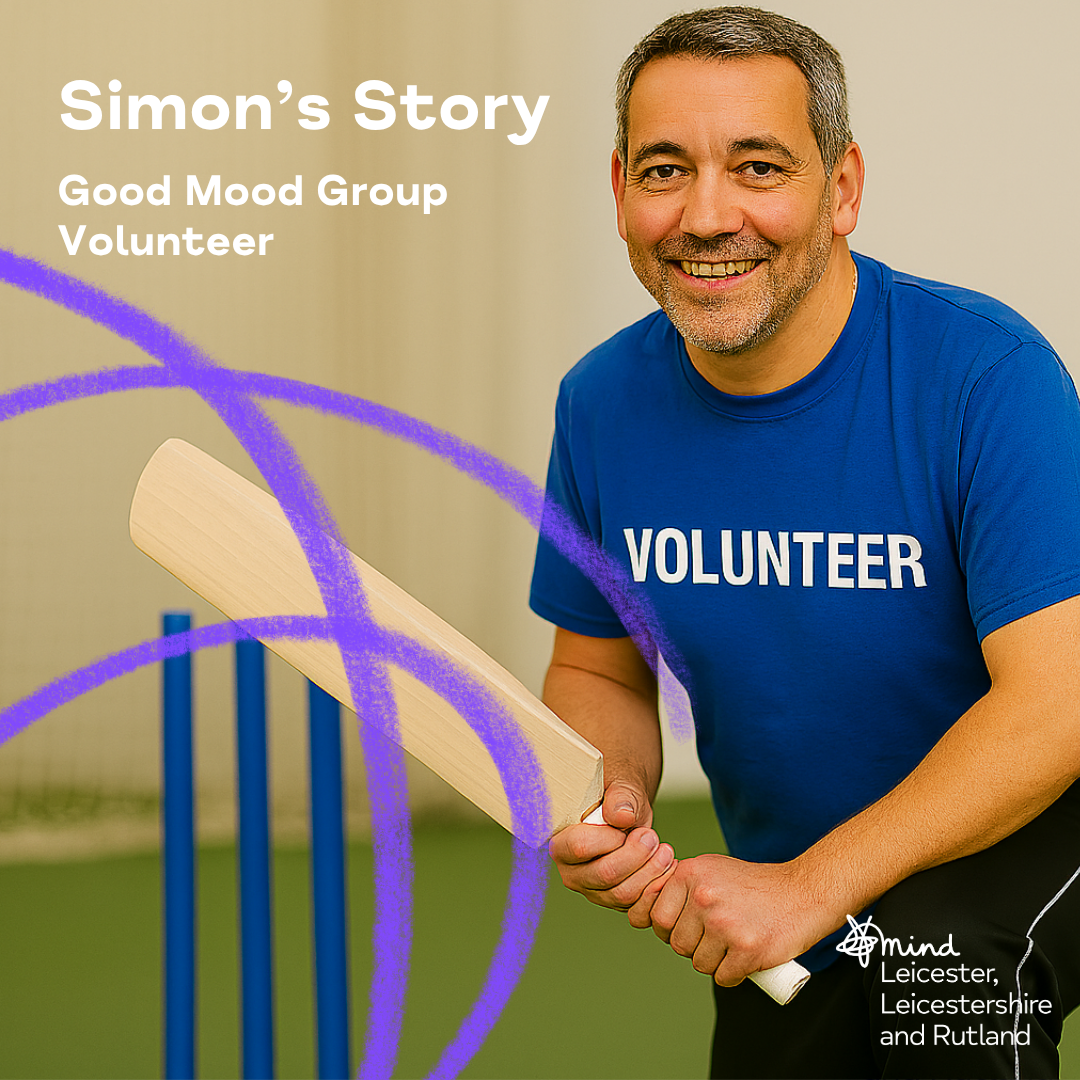
Simon's Story - A Day in the Life of a Good Mood Group Volunteer
Celebrating Volunteers’ Week
For Volunteers’ Week, we’re shining a light on the people who make our Good Mood Groups such welcoming and transformative spaces. Meet Simon, Volunteer for Thorpey’s Bat & Chat sessions, whose passion and energy help bring people together through conversation, connection, and a shared love of cricket.
Meet Simon
Simon has been volunteering with LLR Mind for 18 months, first getting involved as a marshal for the Mental Elf festive Fun Run in 2024. After experiencing the “buzz” of volunteering, he returned again in 2025 and soon became more involved.
Having personally benefited from the charity’s support, Simon wanted to give something back. When the opportunity arose to become a Volunteer for Thorpey’s Bat & Chat Good Mood Group, he jumped at the chance. Not only has this allowed him to support others, it also introduced him to the incredible work of the Leicestershire & Rutland Cricket Foundation (LRCF).
What a Typical Session Looks Like
Simon’s sessions start well before the first ball is bowled. He arrives early to check in with LLR Mind and LRCF staff, ensuring everything is ready and running smoothly.
As participants arrive, Simon makes a point of welcoming everyone—especially new faces—helping them feel at ease from the moment they walk in.
The session itself blends activity with connection:
- A welcome and informal catch-up
- Softball cricket in the indoor nets
- Refreshments followed by a relaxed group chat
These conversations often touch on mental health topics in a natural, supportive way, creating a safe environment where people can open up if they wish.
Creating a Welcoming Space
For Simon, creating the right atmosphere is key. He helped shape the group’s ground rules, giving them a fun cricket-themed twist while keeping them meaningful.
He makes a conscious effort to speak to everyone, encouraging participation without pressure. Whether someone is keen to join in every activity or prefers to observe, Simon ensures they feel included and respected.
I try to lead by example—getting fully involved, cheering others on, and making sure everyone knows they’re welcome.
Supporting Others
A big part of Simon’s role is simply being there for people. He offers:
- A safe space to connect and share
- A listening ear grounded in empathy and understanding
- Encouragement and recognition of small wins
If someone is new or feeling unsure, Simon introduces himself, gently encourages them to join in, and checks in with them before they leave. His approach is simple but powerful: create trust, without ever forcing participation.
Behind the Scenes
What many people don’t see is the preparation and teamwork involved. Simon regularly checks in with staff to ensure any follow-up support or signposting is provided when needed. Sessions are guided by a structured programme developed by National Mind, helping volunteers deliver consistent, meaningful activities.
But perhaps the most unexpected aspect of the role is the feeling it brings.
There’s an adrenaline buzz from seeing people come together, have fun, forget their worries, and leave with a plan going forward.
The Impact of Good Mood Groups
Simon believes Good Mood Groups are vital for mental wellbeing. They provide:
- A positive distraction
- A reminder that you’re not alone
- Opportunities to connect and build friendships
- Access to further support through signposting
For many attendees, the impact is seen in small but meaningful ways—smiles, laughter, friendly competition during cricket, and the chance to share what’s on their mind.
One moment that stands out for Simon is seeing the group evolve into a true team.
Being asked to volunteer for Thorpey’s Bat & Chat and watching that sense of togetherness grow has made me proud.
Personal Reflections
Volunteering has been a deeply rewarding experience for Simon. He’s developed stronger listening skills, a deeper sense of empathy, and a new perspective on mental health.
Seeing people’s wellbeing improve is what I enjoy most. It’s a charity close to my heart, and it means a lot to be part of that journey.
At the same time, Simon is mindful of looking after his own wellbeing—reminding himself to step back when needed and support the professionals in their roles.
Words of Encouragement
To anyone thinking about joining a Good Mood Group, Simon’s advice is simple:
You’ve got nothing to lose—give it a go!
And for those considering volunteering:
If you’re looking for a real feel-good factor, this is a brilliant way to achieve it.
According to Simon, the qualities that make a great volunteer are empathy, strong listening skills, trustworthiness, and respect for confidentiality.
Quick Fire Round
- Favourite activity: Softball cricket
- One word for volunteering: “Howzat – amazing!”
- Tea, coffee or biscuits: All three!
Simon’s story is a powerful reminder of the difference volunteers make every single day. This Volunteers’ Week, we celebrate Simon—and all our volunteers—who help create supportive, uplifting spaces where people can connect, grow, and feel like themselves again.
Stock image used

Jane's Story
Jane was feeling anxious, overwhelmed, and struggling with self-criticism. She was referred to the Community Wellbeing Service (CWS) by a mental health practitioner at her GP surgery. Jane was also taking medication for her anxiety, and at the same time was referred to CWS to learn some practical tips and coping mechanisms she could implement.
Jane was feeling increasingly anxious and overwhelmed, often doubting her abilities; particularly at work. She works in a social setting with customers and expressed feeling anxious as she worries about what others think about her. Jane also mentioned that she gets the physical sensations of anxiety i.e. feeling shaky, faster heartbeat, sweating, and she can even start to feel sick and avoid eating. Jane’s feelings of anxiety also affected her sleep because she struggled to fall asleep as she oftentimes found herself overthinking before bed-time.
Jane then received a variety of toolkits that she could work on in the next sessions; she preferred to talk them through in the sessions as well as practice them on her own. Some of the toolkits she worked on were the relaxation, mindfulness, challenging inner critic, and anxiety toolkits, which helped her in identifying the triggers and her helpful and unhelpful coping mechanisms.
Towards the end of the sessions, Jane was able to identify the triggers for her anxiety and was ready to put in practice the helpful coping mechanisms she developed. Jane also made a plan of how she will better cope with her triggers and from now on.
Jane reflects:
Everything worked during our sessions; talking it out made me realise things I did not before, because they were all in my head. Talking it out – putting it on a paper, I realised it is not a big deal. Sahar, you are a lovely person, and you have helped me a lot, thank you very much’.
Sahar her Community Wellbeing Advisor comments:
Being able to have these sessions with Jane was crucial in assisting her to not only develop helpful tips, but in also identifying triggers and determining how to cope with them. It provided her a great sense of motivation and positive outlook on her situation and interactions with everyone at work. Jane was very engaging and eager to make a positive change for her mental well-being and was willing to practice what she learnt outside of our sessions.
Stock image used

Mel's Story
Mel was referred to the service via a Mental Health Practitioner to support her with her long standing anxiety. Redundancy had led to a decline in her physical and mental health, which had given Mel a push to seek support. Mel had been on anti-depressants for several months but felt it had only helped to a certain extent, and wanted support to complete tasks and achieve goals.
Mel admitted she was nervous and a bit sceptical about being referred to the service, she wasn’t sure if it would make a difference or what to expect. She didn’t realise the support would be so practical but liked this as she was worried about having to talk about her feelings.
When starting her sessions, Mel was struggling to sleep, felt unmotivated and carried a lot of guilt for not being able to achieve basic tasks. She would have bursts of motivation and start tasks, but this was short lived, so wanted to know how she could maintain consistency.
Starting with the basics of a simple morning routine and then adding layers of additional tools such as SMART Goals (Specific, Measurable, Achievable, Relevant, and Time-Bound), daily planner, along with some journalling exercises and mindfulness, Mel build up a tool kit of coping strategies and exercises that worked for her.
Mel started to gain more energy, was sleeping better, was able to complete tasks around the house and felt able to get up in the morning.
Mel commented:
It’s provided me with more long term tools that I feel I will forever be able to use. I’ve been able to move forward with my life, I felt stuck before and that I was just existing, it’s got me out of the rut I was in and I feel more optimistic about my future.
At the end of our sessions Mel felt she had enough tools to continue to move forward and in time, hoped to reach out to employment support to look at returning to work.
Hina, her Community Wellbeing Lead reflects:
It was a pleasure to have been able to support Mel and to see how the small daily tools, built up to have an overall positive effect on life. To be able to introduce people like Mel to tools they feel they can forever use, is so rewarding.
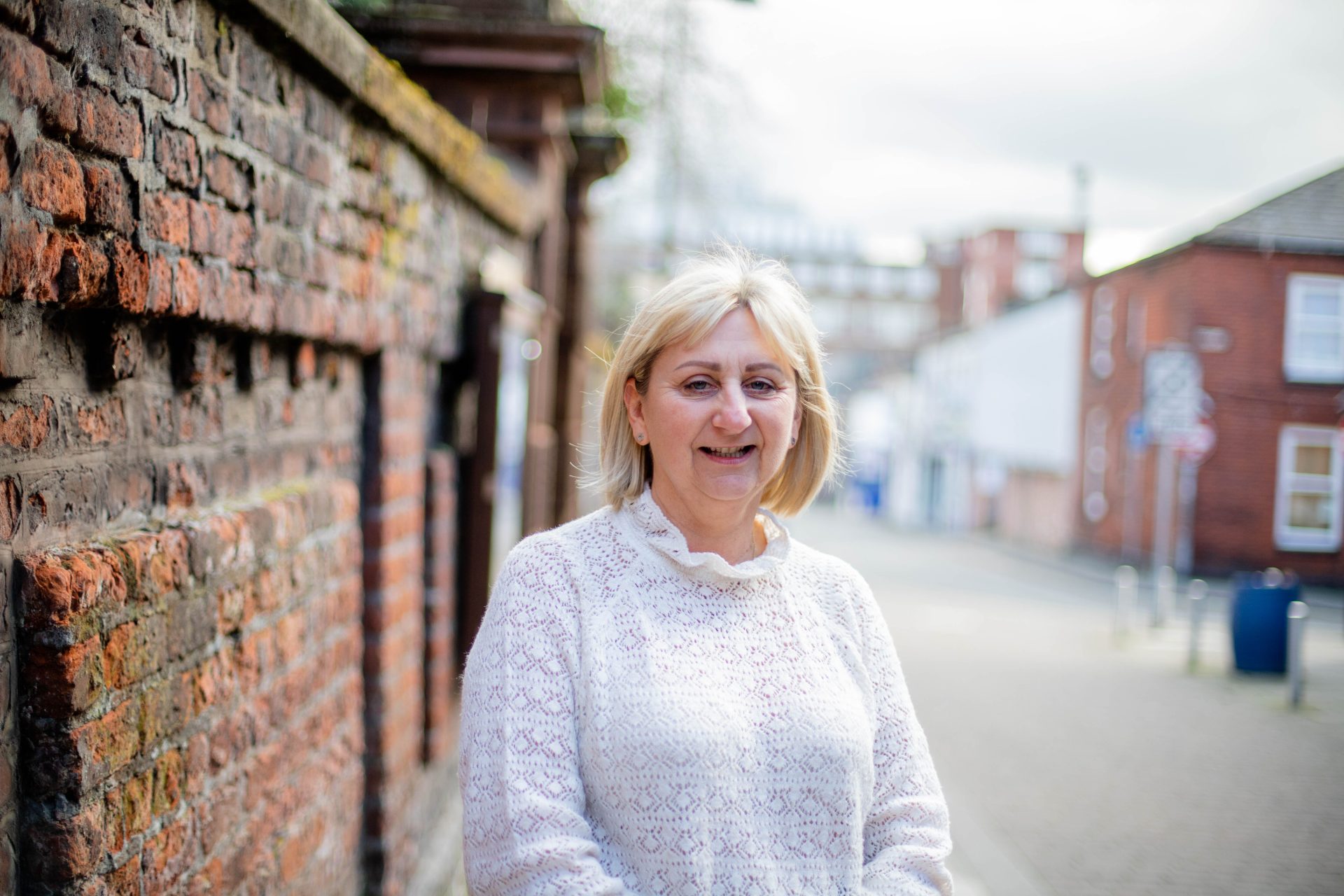
Helen's Story
Life is full of changes, and for Helen*, the past year brought many challenges all at once. She experienced multiple losses that had accumulated over time—bereavement, her son moving out, starting a new job, and moving house. These significant life shifts left her feeling anxious, struggling with sleep, and even experiencing flare ups with physical health issues like eczema. Realising she needed support, Helen sought guidance to help manage these transitions and take care of her well-being.
When Helen first started the Supported Self Help programme, she felt overwhelmed. She quickly realized that she needed support in multiple areas of her life. Fortunately, her Supported Self-Help Practitioner, Leanne, helped Helen focus on one crucial aspect—self-esteem. With so many changes happening, Helen had lost confidence in herself. Through this targeted approach, she began to reflect on her thoughts, recognize areas she could change, and slowly rebuild her self-worth. She found herself feeling more empowered and equipped with useful tools to help her navigate this challenging period.
Helen recalls:
The self-esteem did kickstart me to think about my thinking style, be reflective, and recognise the things I could change.
For Helen, the service was easy to use and provided a clear structure that helped her reflect and move forward. Having Leanne’s guidance was particularly beneficial—her insights into mental health were validating and reassuring.
The workbook resources were straightforward to follow, making the process of self-reflection more manageable. Regular check-ins played a crucial role in Helen’s progress, as they provided a balance of listening, validation, and practical guidance. Knowing that someone was there to check in on her made a significant difference, helping her stay on track and feel supported throughout her journey.
Helen found Supported Self Help to be personal and tailored to her needs. The person-centred approach made her feel heard and understood, allowing her to focus on where she was in life and what she needed to move forward, having a positive impact on her well-being.
Helen comments:
I’ve gained knowledge and self-knowledge. It’s given me more confidence to put myself and my wellbeing first and to move forward having consideration for that.
Her journey through Supported Self Help has been one of growth, empowerment, and resilience. Now, with the tools she has gained, Helen continues to move forward with greater self-assurance and a stronger sense of self-worth.
Leanne comments:
Helen engaged positively with the supported self-help materials and was honest about the strategies she found more challenging than others. We worked through the strategies collaboratively to incorporate them in a way that felt meaningful and personal to Helen, which is key to our person-centred approach. It’s been wonderful to see Helen develop her sense of self-compassion for her personal wellbeing journey.
*pseudonym and stock image used
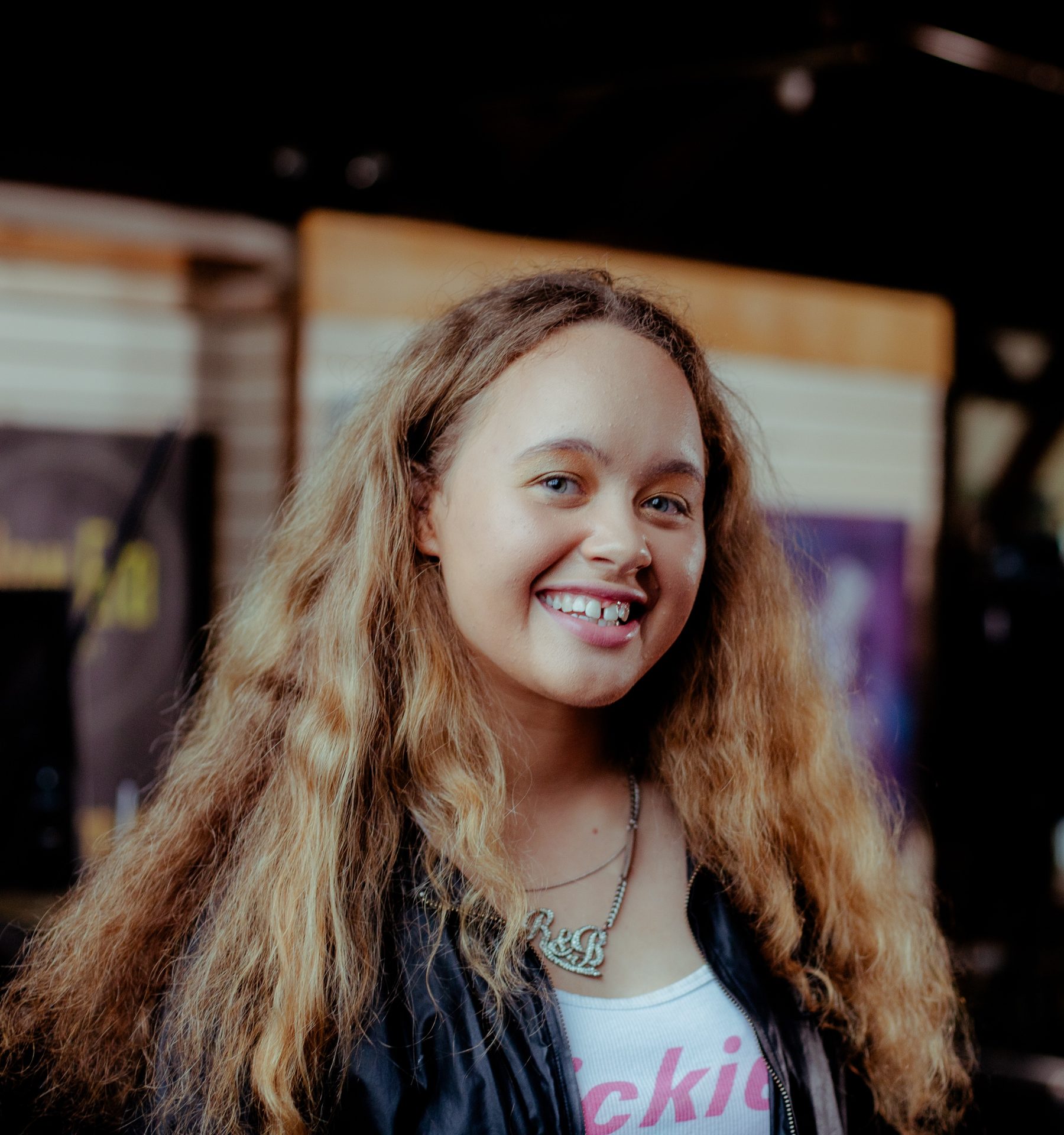
Emma's Story
Emma is a college student and works part-time. She referred herself to the Supported Self Help Programme as she was experiencing anxiety and having panic attacks, which was affecting her at work.
Emma remembers:
“I was struggling badly and needed support quickly, I didn’t want to have to wait months and months for support.”
With her mum’s support, Emma searched online and discovered the Supported Self Help (SSH) Programme through LLR Mind, deciding it was worth a try. SSH is a free, one-on-one, six-week guided self-help programme.
She initially felt a little nervous because Emma didn’t 100% know what I was doing, but after the first session, Emma felt comfortable and safe and that she could trust her practitioner.
The SSH resources and extra information were beneficial to Emma. By reading the information in the documents and completing the workbook, Emma was able to find out more about her anxiety and effective coping strategies.
Emma remarks:
I would recommend the service and encourage others to give it a go and see if it helps. It worked for me and I now have the tools and strategies that I can use in the future.
By completing the SSH Programme, Emma gained insight into her emotions and developed strategies to support herself. She also feels empowered to educate those around her if she encounters someone experiencing similar feelings. It has ultimately given Emma ways to cope with her anxiety and continues to help her wellbeing.
Dipti, Emma’s SSH practitioner adds:
Emma has made great progress though the SSH Programme by engaging with the materials and putting a lot of effort in to trying the different strategies and exercises. She has worked hard to help herself and improve her mental wellbeing which has been great to see.
Stock image used
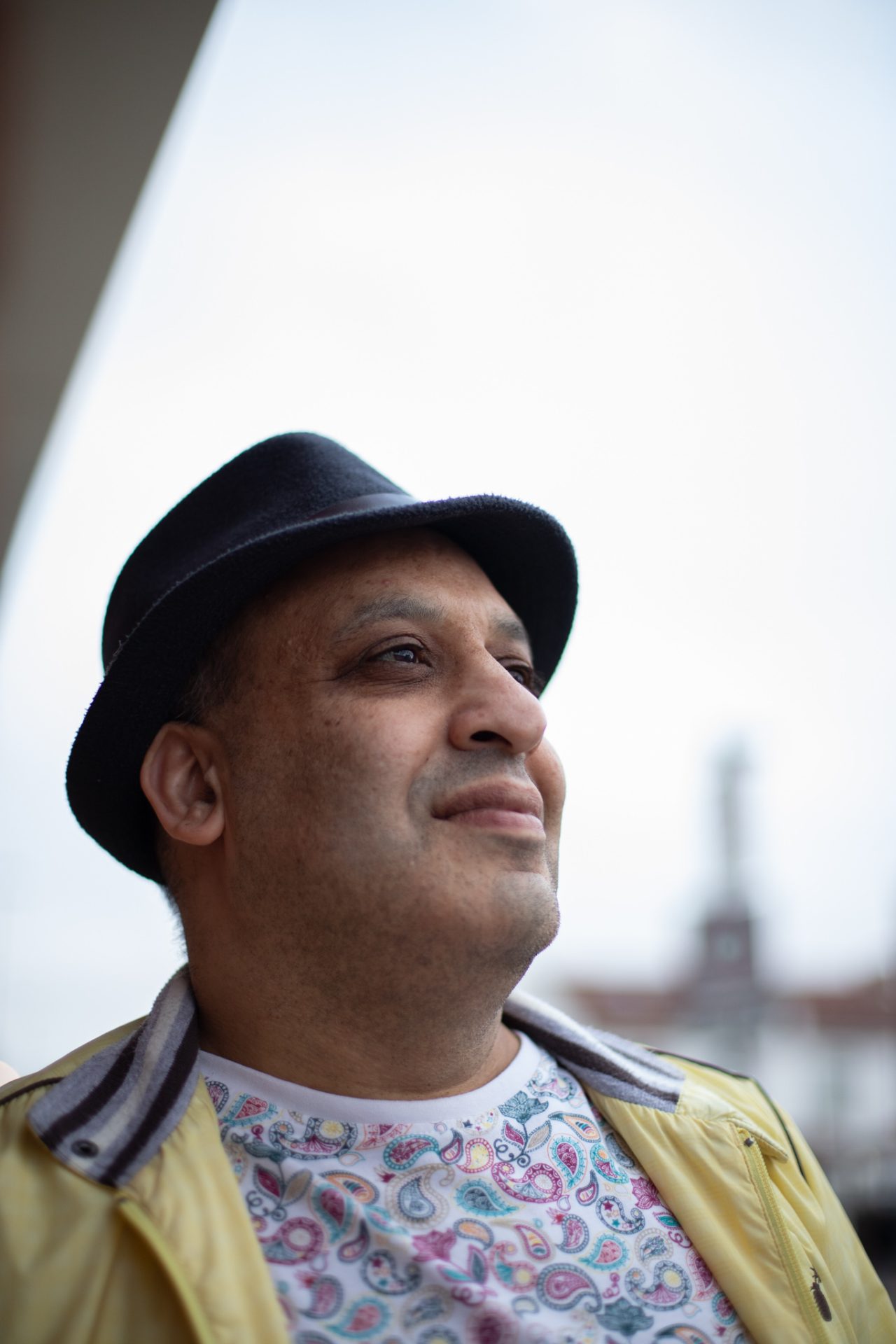
Deepak's Story
Deepak is 48 year old and from Charnwood. He was experiencing a sense of hopelessness and had been struggling with suicidal ideations for months. He was also facing uncharacteristic bouts of rage and anger that interfered with his ability to hold down a job. Despite experiencing a difficult and abusive childhood, Deepak had never sought or received support with his mental health previously.
He realised he needed support and self-referred to the Supported Self-Help service. Deepak was apprehensive about the service at first, and wasn’t sure it was going to be useful for him but he also felt driven to find strategies that worked for him and was incredibly committed to the process throughout.
He found the workbooks and worksheets helpful, he comments:
It made me take a step back and look at the overview of the situation.
Deepak found using the P.O.W.E.R (pause, observe, weigh, experience and review) technique especially helpful and found that he was able to start implementing it quickly. The P.O.W.E.R technique allowed Deepak to focus on his patterns of thinking and behaviour and decide how he wanted to proceed, rather than acting from a place of anxiety or anger and later regretting his actions.
Isobel, Deepak’s Supported Self Help Practitioner added:
It allowed him to improve his mood without the use of medication, which was something that was really important to him personally.
Towards the end of his Supported Self Help sessions, Deepak found out he’d gotten a job that he’d applied for a while before, and was excited to get going. He was confident he could use the tools we’d worked on to make sure he was as successful as possible.
Deepak concludes:
Try it, don’t dismiss it. Don’t be apprehensive. Give it a go, be fully invested into the whole self-help kinda thing. Keep going, keep at it. You may get some blips, some peaks and troughs, you may feel better but keep at it.
Stock image used

Elizabeth's Story
Elizabeth* was feeling anxious, overwhelmed, and having difficulty dealing with her current feelings and emotions. She was referred to the Community Wellbeing Service (CWS) by a mental health practitioner at her GP surgery. Elizabeth was suspected of having ADHD and was asked to complete an assessment. Whilst waiting to be picked up by a specialised therapy service after her assessment, Elizabeth was referred to CWS to learn some practical tips and coping mechanisms she could implement.
Elizabeth felt overwhelmed by work pressure and constantly worried when outside of work. nable to determine the exact cause of her feelings, Elizabeth was unsure how to deal with them without feeling worse. Elizabeth also realised that it had started affecting her well-being at work, as she would become anxious and irritable about upcoming meetings or when put in new situations.
Her CWS adviser provided Elizabeth with a variety of toolkits that she could work on in the next sessions; she preferred to talk them through in the sessions as well as practice them on her own. The toolkits she worked on were exercises based on relaxation and mindfulness techniques, and the anxiety toolkits which helped her identify her triggers and as a result, learn helpful and unhelpful coping behaviour.
Sahar, her CWS advisor comments:
Being able to have these sessions with Elizabeth was crucial in assisting her to not only develop helpful tips, but in also identifying triggers and determining how to cope with them. It provided her with a great sense of motivation and positive outlook on her situation. She was engaging and willing to cooperate with me throughout the sessions, which is considered a key factor in our person-centred approach.
By the end of the sessions, Elizabeth was able to identify the triggers for her anxiety and was ready to put into practice the helpful coping mechanisms she developed. Elizabeth also made a plan for how she will better cope with her symptoms and emotions from now on, feeling more positive about the future.
Elizabeth reflects:
I have learned new coping mechanisms to be able to deal with problems well. I was feeling a bit anxious and nervous before starting the first session, and that is mainly because I did not know what to expect. But now, I feel much better as you have been very nice to me and everything worked well.
*pseudonym and stock image used
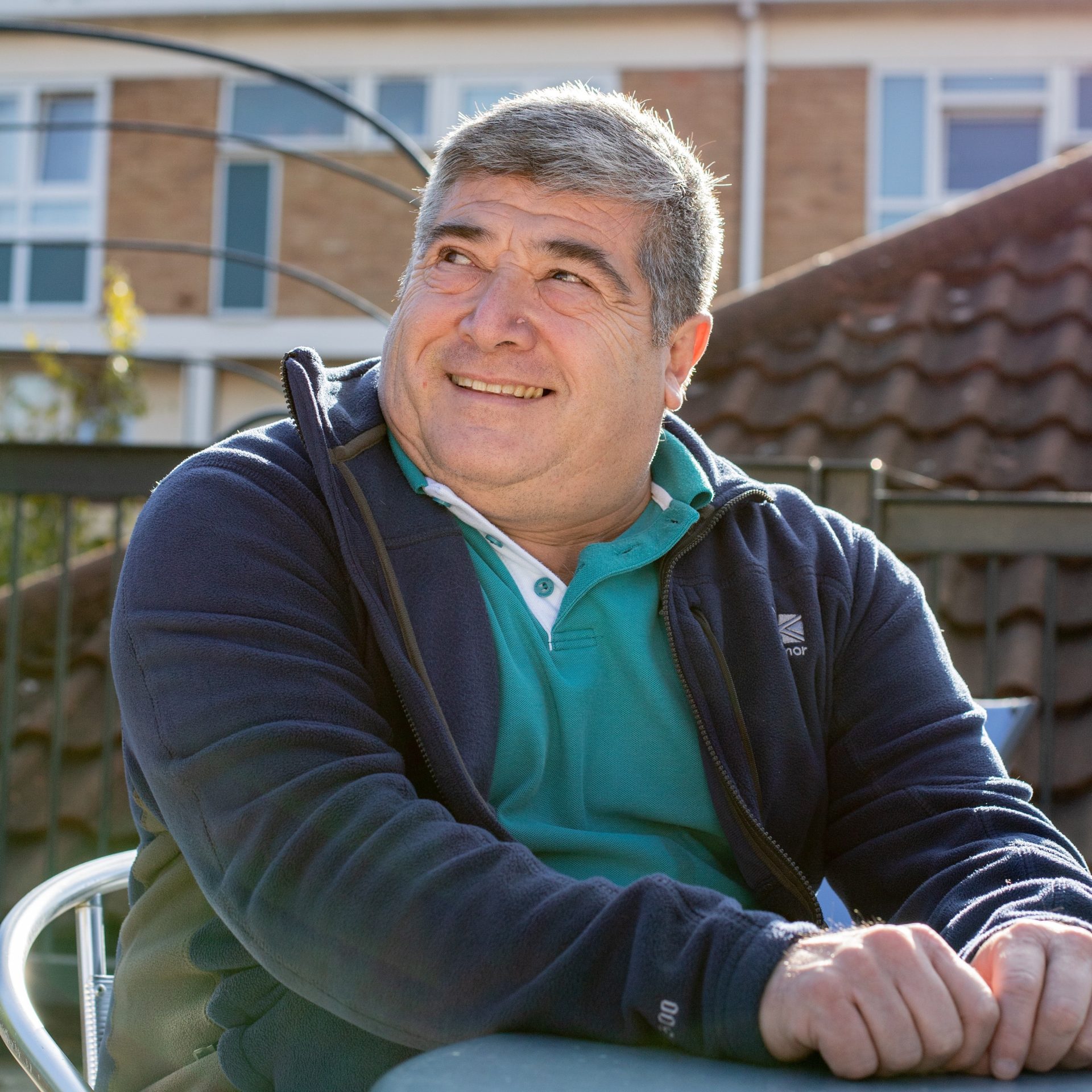
Mark's Story
Mark* was losing hope, felt lost and in despair not knowing what support or help was available to him. By chance, he enquired at his local pharmacy whilst picking up his medication and was connected to the mental health team at his GP surgery and a referral to the Community Wellbeing Service was made.
Having to take a break from work due to physical health issues, Mark was struggling to deal with the changes, his pain levels and was experiencing social isolation. He’d stopped engaging in his usual hobbies and was feeling low in mood and lacking motivation.
Before the first session Mark felt apprehensive, he commented:
I felt beyond help, but this went out the window after the first session.
During his first session, Mark had the opportunity to sit down with the Community Wellbeing Advisor and together they reviewed his current situation and decide on some goals. Tools were introduced in stages, slowly building his confidence and hope.
Hina, Mark’s CW Lead reflects:
It was important to acknowledge the challenges Mark had faced and how much life had changed for him, with that acceptance he was able to look at what he could do to move forwards.
Examples of the tools the Community Wellbeing Service uses to support their beneficiaries like Mark include, observing your thoughts, keeping a gratitude diary and using a weekly planner. These tools helped Mark gain perspective and control of his situation.
Mark observes:
Looking back, for me it was the flexibility of the tools, and the pace of the appointments, it felt like it was adapted around me.
By the end of the sessions, Mark had created a list of healthy distractions for bad pain days and a list of activities for when he was mobile. He had started to engage in his previous hobbies, one of which included a social group.
At the end of our sessions, he had plans and support in place to gain new employment to suit his needs and long term goals for his hobbies.
Mark reflects on the support he received:
I feel empowered, more relaxed, stronger, able to tackle the daily challenges and at ease with my health conditions. I feel more personable, and wanting to be around others.
Hina adds:
I found being a soundboard for Mark was key in him finding strength and motivation in dealing with the changes of the last few years. Introducing him to information and the link between mental and physical health was a turning point and allowed him to progress and manage his wellbeing with an holistic view. He engaged well with all the tools and by the end was adapting them to suit him best, which is what we encourage our beneficiaries to do.
*Pseudonym and stock image used